- From: tim finin <finin@cs.umbc.edu>
- Date: Mon, 22 Apr 2002 13:16:40 -0400
- To: Jeff Heflin <heflin@cse.lehigh.edu>
- CC: Drew McDermott <drew.mcdermott@yale.edu>, drager@bbn.com, www-rdf-logic@w3.org
- Message-ID: <3CC44578.404D5CA7@cs.umbc.edu>
Jeff Heflin wrote:
> ... Since I was the initial proponent of daml:imports on the Joint
> Committee, let me address this issue. You are absolutely correct that
> the imports statement must be used. Simply refering to a namespace does
> not include any ontology definitions. You must make the imports
> statement explicit. Period. ...

So, what does it mean if one refers to a term in an ontology
without importing it? Should this be considered an error?  If
so, is there a reasonable recovery technique, like ignoring
triples using externally defined terms not imported?

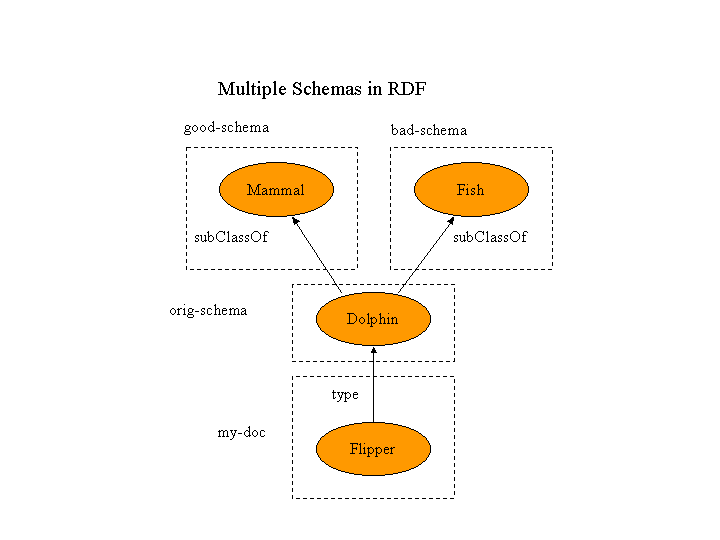
> ... The problem with using RDF namespaces to decide which schemas are
> relevant is that multiple files may contain different definitions about
> the same URI. See the attached GIF for example. The URI for Dolphin has
> additional definitions in two schemas, good-schema and bad-schema. These
> definitions are simply rdfs:subClassOf statements that happen to have
> orig-schema#Dolphin as their subject. The problem with simply using
> namespaces is I can't say that my-doc agrees with the definitions of
> Dolphin found in good-schema but not those found in bad-schema. This is
> why daml:imports was an essential component of the language. ...

Jeff -- I wonder if you can clarify the situation described by the gif
image.  In the imports-required case, wouldn't it make sense only if
my-docs imported orig-schema which subsequently imported good-schema and
bad-schema? I always assumed that importing was transitive, since the model
was informally described as "like including the file".  If so, then my-doc
can't use orig-schema without also committing to both good-schema and bad-schema.

tim
Attachments
- image/gif attachment: imports.gif
Received on Monday, 22 April 2002 13:14:53 UTC